Article
Mar 12, 2025
Colourism in Bangladesh: A Toxic Cultural Attitude, Seemingly Impossible to Uproot
Mar 12, 2025
If "beautiful" means "fair and lovely," then "dark" and "unpleasant" must be the reverse. “She is dark-skinned, but look how generous she is.” "He has a nearly black complexion, but he must have done something right in a previous life to find such a lovely, fair wife." If you’ve grown up in a South Asian household, these insults have either messed up your self-esteem for life, or you’ve built a thick skin to them by now. However, these colorist remarks are here to stay. Because, as unpleasant as it may sound, colorism is ingrained in the culture of Bangladesh and most of South Asia. On the internet, there are several articles criticizing colorism in South Asian nations. It's regrettable that these viewpoints are necessary at all. Why does anyone have to yell at your face that “dark is beautiful too”? The simple fact that people need urgency from other sources to accept that black skin isn’t ugly- is itself horrible. Do we need another piece of write-up on this topic when so many of them already exist? Yes, since it’s 2022, and skin colour bias is still an issue.
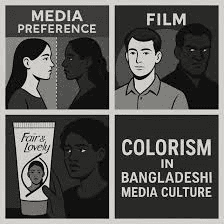
What Colorism in Bangladesh Looks Like
Having lived in Bangladesh for all of the twenty-something years of my life, I’ve been skin-tone humiliated innumerable times- and largely by close family members. It’s nothing uncommon for a Bangladeshi — colourism here typically begins at home. You’d rarely witness a family exult in the birth of a child if they turn out to be dark/dusky-skinned (unless it’s a baby boy in some situations, but that’s whole another issue).
Friends give you names depending on your dark complexion; “Kala” and “Kalu” normally take the form of fondness, but “Kali” is widely used to indicate disgruntlement towards a dark-skinned female. You witness your fairer counterparts receiving greater attention, support, and perceived superiority from others at every stage of life, including romantic, professional, and academic.
Commercials for skin-lightening products and jingles romanticising fair skin become a mundane aspect of your everyday. Because you have already lost skin color points since birth, society expects you to have remarkable skills to enhance your personality if your skin tone is darker.
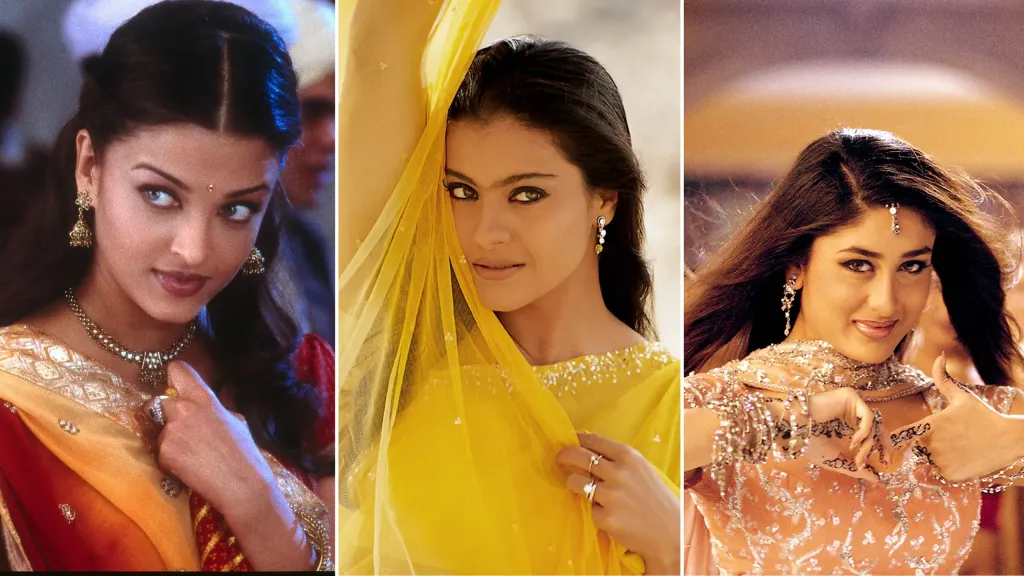
You must look up to famous brown-skinned celebrities to feel better about yourself because “dark-skinned people can be successful too.”
Your complexion is always compared to that of your sibling(s), sometimes even to that of your parents if there is a visible difference. But there are days you get to thank your lucky stars when you’re not the most dark-skinned in the room.
Even as a grownup, when you meet a relative after a long time, one of the first things they say to you is how your skin tone has gone three shades darker than before- because, of course, how dare you get any darker than you already are?
Being skin-tone-shamed feels even worse when it’s wedding o’clock, and you have to face a bunch of judgmental strangers deeming you suitable/unsuitable for marrying their son or daughter based on your complexion. Apparently, marrying a dark-skinned individual heightens the chances of your kids’ not being fair because God forbid you to give birth to a dark-skinned child. In some places, marrying off a dark-skinned girl is more difficult than solving a Rubik’s cube – in some cases, families have to provide excessive amounts of dowry to the groom to compensate for their “flawed” daughter.
The association of fair-toned skin with beauty and grace also stems from the belief that everything white is “pure” and “good” while black is “evil” and “ominous”. Bengalis have a rather unique way of describing skin colours. “দুধে আলতা” if you’re really fair and “ময়লা” if you’re on the darker side. Googled the English translation for ময়লা, and these words showed up: “dirty, filthy, soiled, messy, foul, grimy”.
Colourism – a Colonial and a Classist Practice
Bengalis’ fixation on fair skin is largely the result of colonial remnants that South Asians, in general, just can’t shake off their systems.
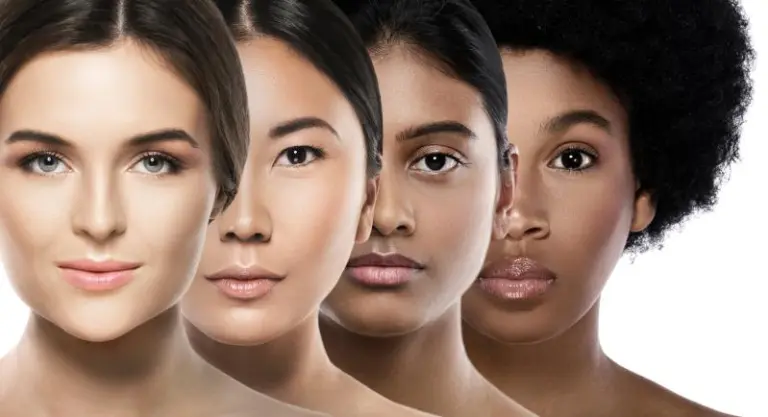
Light-skinned conquerors of the subcontinent in the past had set a standard for beauty ages ago, which we now find extremely difficult to uproot.
Even among the natives themselves, “fair” was held as an indication of power and superiority. The upper-class nobles would stay indoors, safeguarded from the heat and sunlight, which had to be endured by the lower class on a daily basis as they performed physical labour out in the hot weather. The same is true even now; city dwellers do tend to be fairer than day labourers who work under the sun for long hours or those who reside in rural areas. Even so, the majority of Bangladesh’s population comprises skin tones that are different shades of brown rather than the widely accepted pale or fair.
The devotion of South Asians to white supremacy or colonial influence is a little funny, given how even the highly revered “দুধে আলতা” is too “brown” by European standards. People from this subcontinent are, in fact, collectively referred to as “brown people” by the rest of the world. Yet, the elegant tones of brown that are a result of several natural and genetic factors, rather than randomness or luck – are considered a deal-breaker in many career and marriage prospects.
Racism ⇌ Colorism
In a literal sense, racism and colourism are different and shouldn’t be interpreted interchangeably. But one can beget the other, especially if races can be differentiated by colour. We know how pervasively both phenomena exist in the West. But South Asian colourism is also instigated by a racist mindset, and this is seen when you see South Asians refer to someone of African descent with racist slurs such as “Kaula” in a derogatory sense. Black immigrants in Bangladesh face this on a continual basis. On the other hand, white foreigners are treated with much more respect, sometimes with a comical attempt at speaking in English.
There are no real statistics of how South Asian colourism has impacted people the way there are reported accounts of racist hate crimes in developed nations. But the psychological damage caused by colourism has led to extreme cases, including suicide.
Skin Color Can be “Treated”
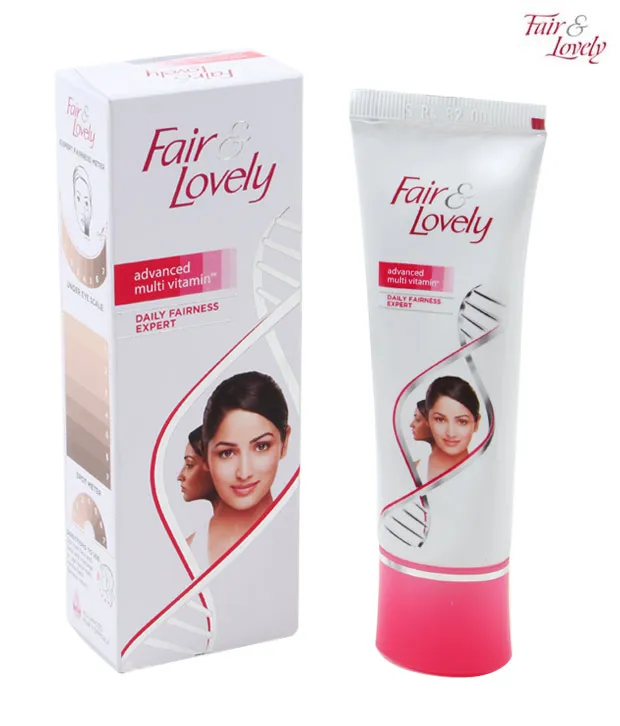
Fair & Lovely – a skin-lightening product.
One major reason skin colour bias has persisted for years is a common belief that dark skin can be “improved”. In 1975, Hindustan Unilever introduced “Fair & Lovely” to the beauty industry as the first of its kind, capitalising on this belief and the general low regard for dark skin tone in India. It soon found a huge market in neighbouring countries – Bangladesh being one of them – for both men and women.
Competitors soon followed suit, and many companies came up with skin-lightening solutions for the Asian community. Global beauty giants market their skin-lightening products as solutions for uneven skin tones or dark patches on the skin. Many of these products are targeted only at Asian, African, and Middle Eastern markets and not the multinationals’ home countries.
Bangladeshi beauty brands didn’t fail to mimic their global counterparts too. Renowned local brands such as Tibet and Keya have their own lines of skin-lightening creams to cater to the localities.
These skin-lightening cosmetic products build a strong brand reputation centring on the fact that lighter skin boosts confidence.
Avoiding the sun, obsessively applying homemade remedies, and using fairness creams are some of the common antidotes to dark skin – used by both rural and urban people. Makeup is often used to temporarily replace melanin with a foundation five shades lighter than a person’s natural skin colour. Beauty parlours go as far as providing bleaching treatments to foster a lighter complexion. The market for fairness creams and fairness treatments is not limited to women. Although South Asian colourism is mostly female-focused, men are not completely exempt from it.
But the increasing anti-colourism awareness in recent years compelled beauty brands to reflect on their brand message and reform it. In 2020, Unilever rebranded Fair & Lovely to “Glow & Lovely”. While this could be considered to be the brand’s “lovely” attempt at inclusiveness, it doesn’t solve even half the problem.
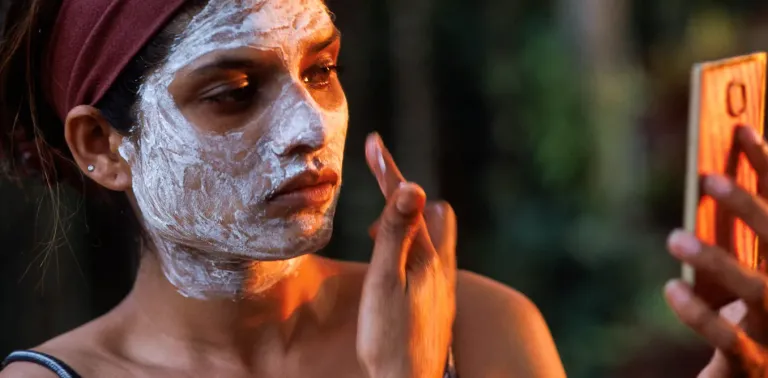
Glow & Lovely is still a skin-lightening product used for the same purpose as before, and huge demand for it and other similar fairness products still exists.
You’d think “internet culture” would make way for obliterating colourism. But to get a rough idea about the craze for skin-lightening products even in 2022, take a look at some of the Facebook pages that sell them and the hype in the comments section on their posts. Most of these pages sell products imported from other colourist nations and promise dramatic results in a short time. Customers don’t realise or don’t want to realise the potential for fraud by these businesses and the presence of toxic substances in these products that can engender dangerous skin diseases, including skin cancer.
Is Anything Changing?
Changing the long-established mindset of an entire subcontinent or even that of a single nation is practically impossible. But more people are speaking up, referring to colourism as a serious problem, voicing their opinions on social media, and receiving instant acknowledgement and support from others. Protests and awareness campaigns on colourism have actually urged certain businesses to reconsider their branding efforts and recognise colourism as detrimental, albeit for clout. Because social media is largely used by the younger generation, anti-colourist sentiments are more welcome here. In fact, people here encourage each other to be confident in their skin, regardless of colour.
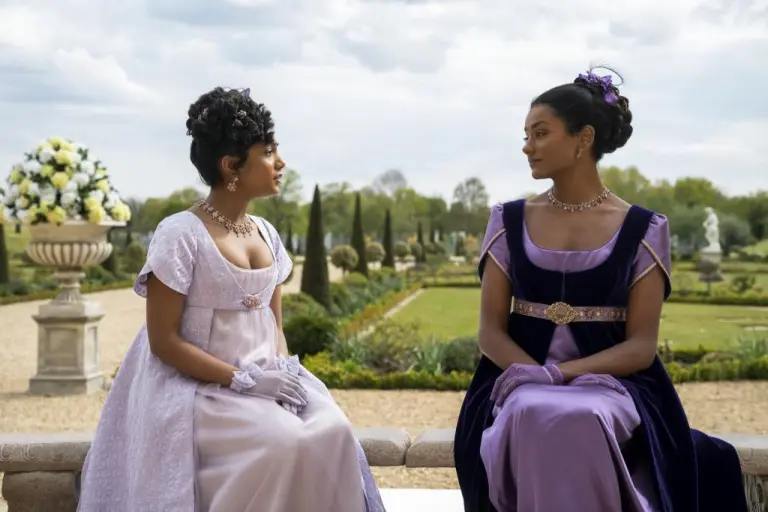
The Sharma sisters in Netflix’s hit series, Bridgerton.
But that doesn’t mean offensive comments don’t exist at all. What’s impressive is how the receivers handle these comments – makes you sit back and think about how wrong those fairness cream commercials were when they said only a fairer skin tone could produce confidence.
It’s honestly nice to see people come out of their diffident shells and flaunt their melanin – defying the deep-seated beauty standards. A decade ago, I used to think brides were “supposed” to look fair, no matter what their natural complexion may be, because I’d never seen a dark-skinned bride when I was a kid. But recently, we’ve been seeing brides embracing their natural skin tones and getting their makeup done according to their skin shade instead of going for artificially fair makeup. Even though this scenario is not as prevalent nationwide as we’d prefer, small changes can be considered baby steps toward something big.
Pseudo Empathy? No, Thanks
When we talk about colourism being a problem, we want it to be recognised as a problem. You can acknowledge and empathise with the struggles of dark-skinned individuals in this country but even do refrain from showing pseudo empathy. Multiple times, opinions on social media as well as renowned newspapers have portrayed dark skin as something that should be pitied upon.
Some people take the context of anti-colourism as a “trend” to follow, and because they are not fully aware of the problem, they use the wrong way to approach this topic publicly. For example, glorifying somebody because they’ve married a dark-skinned individual, using phrases such as “dark but beautiful”. These narratives are not helpful – they don’t bring about inclusiveness; if anything, they alienate dark skin even more.
Conclusion
Beauty is subjective. Skin colour has nothing to do with beauty, but unfortunately, the mindset has everything to do with beauty. We can only hope that the newer generations will unlearn the toxic colourist mindset of their ancestors and preach love over any difference – be it skin colour, religion, race, gender, class, or literally anything else.
About Author
Nejad is a Bangladeshi visionary, designer, and educator — Founder & CEO of NJ7 Productions, a creative-tech brand specializing in IT solutions. A CodersTrust certified designer, he also founded Projjolon, a student community empowering SSC students to overcome weaknesses and build confidence.
Despite ADHD, academic struggles, and bullying, Nejad turned every setback into fuel for growth. His goal is to inspire the next generation to dream bigger, rise stronger, and never be defined by their past.